

Soil testing in minutes
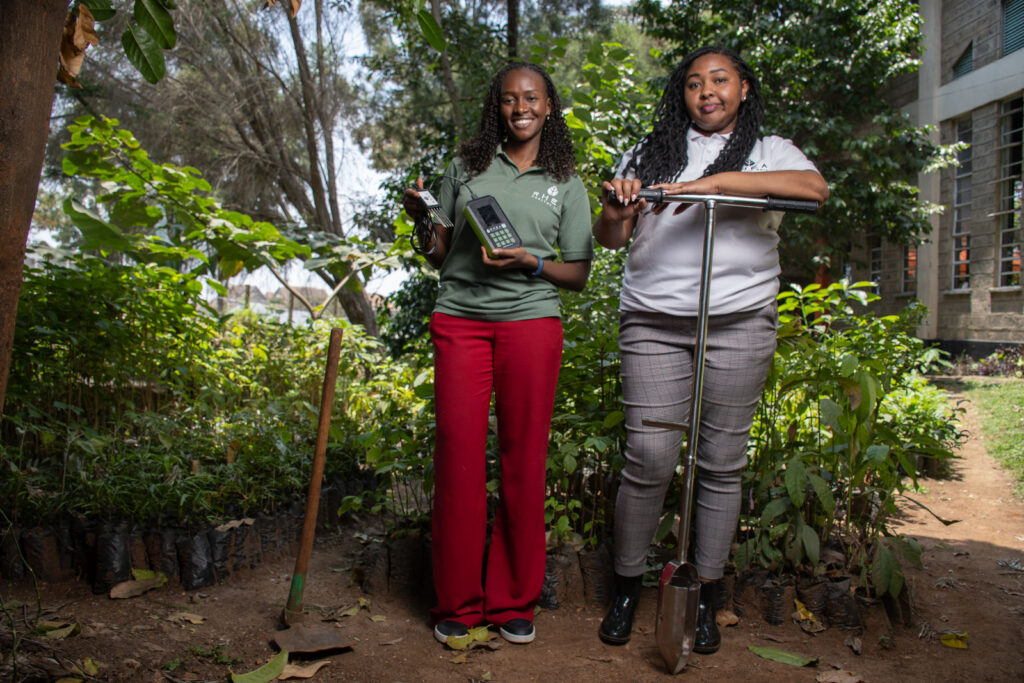
When soil health goes unchecked, farmers pay the price – in wasted inputs, degraded land, and stubbornly low yields. Rhea is tackling this challenge head-on by making fast, affordable, and actionable soil testing accessible to smallholder farmers across Africa. Founded by Soinato Leboo and Priscilla Wakarera, Rhea was born out of first-hand frustration in the field. While running pilot research in eastern Kenya on improving soil fertility using microbial biostimulants, the team encountered crippling delays.
“We expected baseline soil analysis to take two weeks, but it took three months, by the time results came back, we had missed the long rains and lost an entire year. Worse, we saw soil degradation in the control plots, which killed the microbes we were testing.” says Leboo.
Digging deeper, the founders uncovered a systemic problem. Many smallholder farmers apply fertilisers without knowing their soil’s actual condition, often leading to acidification, metal build-up, and declining productivity. Traditional soil testing – slow, expensive, far from rural farms, and hard to interpret – simply wasn’t working for the people who needed it most.
Soil insights, instantly – right on the farm
Rhea’s answer is a portable, lab-quality soil testing solution that delivers results in minutes instead of weeks. Using the Rhea Agripad – a patented, IoT-enabled soil sensor – trained agents can conduct on-site tests and give farmers immediate, easy-to-understand insights.
“Farmers get instant feedback on their soil’s nutrient levels, so they can make informed decisions about fertilisers, conditioners, and amendments, our tailored recommendations reduce over-fertilisation, improve soil health, and ultimately increase yields and incomes.” explains Wakarera.
Behind the scenes, AI and machine learning analyse the soil data collected in the field. The system adapts recommendations to regional soil characteristics, making guidance more precise, timely, and cost-effective.
“We’re a deep-tech agriculture company, AI helps us optimise recommendations for each farmer, while IoT connectivity means results are delivered immediately through the cloud – no delays, no guesswork.” Leboo adds.
From 800 kg to 1,200 kg: real results on real farms
The impact is already tangible. In Murang’a County, avocado farmer John Gitu saw dramatic improvements after working with Rhea. Before the intervention, John harvested around 800 kg of avocados per season. After Rhea conducted soil testing and provided tailored recommendations, improvements in soil and plant health quickly followed. One year later, his harvest had increased to 1,200 kg.
“This wasn’t just about higher yields, John gained practical knowledge about sustainable farming that he can share with his family and community. That’s how long-term impact happens.” says Wakarera.
Growing sustainably, without leaving farmers behind
Affordability and access are central to Rhea’s growth model. The company works through networks of trained local agents who offer soil testing services at a fee, earning commissions and building micro-enterprises. Rhea also partners with cooperatives, NGOs, and government programmes to reach large farmer networks through bundled services.
“Our portable device means farmers can access soil testing anywhere, anytime, By combining agent networks and strategic partnerships, we’re able to scale while keeping the service accessible to smallholder farmers.” says Leboo.
Looking ahead through SWEAT Africa
Through their participation in SWEAT Africa, the Rhea team is focused on collaboration to accelerate impact.
“We’re looking to partner with cooperatives, NGOs, agribusinesses, and governments that want to strengthen soil health at scale, we’re also keen to connect with researchers, deep-tech institutions, and investors working in IoT and AI.” says Wakarera. For Rhea, better soil data isn’t just a technical upgrade – it’s a foundation for more resilient farms, smarter input use